
March Madness has already done what it does best: blown up brackets and rewritten narratives. The defending champions Flordia are gone, bounced earlier than anyone expected, and the field is wide open.
It’s perhaps the best example of how unpredictable college basketball can be, and exactly why so many people tune in every March to watch it all unfold.
Michigan has stepped into the vacuum, rolling through the opening rounds with a blend of depth and defensive pressure that has the Wolverines first in the big 10 and sitting around +300 to win it all, the clearest favorite in a tournament that now looks tough to call.
But while everyone else is debating who cuts down the nets, front offices across the NBA are watching through a completely different lens. Michigan's title odds are being tracked by every best online sportsbook in the country, and the draft implications of every deep run are just as closely monitored inside league front offices.
Over the next few weeks, every big performance is a data point. Every late-game possession is a mini job interview.
March Madness is the last, loudest showcase these prospects get before NBA teams sit down and stack their draft boards for June.

That said, tournament doesn't change who the best prospects are. But what it does change is how confident teams feel about them. Here's why these next few weeks matter more than any scouting report on paper.
Prime Time
The first thing the tournament does for a draft prospect is put them in front of everyone at once.
Coaches, executives, and casual fans who haven't watched a college game all season are suddenly locked in on the same arenas and the same small group of players.
Cameron Boozer at Duke operates in a that space. The pedigree and the production are already documented.

What the tournament gives him is a chance to post those numbers against the best competition available, in an environment that feels closer to an NBA playoff series than a January road game.
For a prospect sitting in the No. 2-3 range, a dominant Final Four run doesn't just hold that position, it can end the conversation about whoever is competing with him for it.
For AJ Dybantsa at BYU, the stage could have been everything. He came in as the consensus No. 1 prospect in the class, but all those eye-popping regular-season performances mean less now that he couldn't show them off in the biggest moments.
The scouts knew he could score 25 with six rebounds and four assists on efficient shooting with 40% three-point accuracy during the winter. What they wanted to see was whether he could do it when the whole country was watching, when the stakes were title-game high and every possession felt like a draft workout.
Now that BYU's run is over, that reassurance is missing. The tape still shows a franchise-changer, but without the March spotlight to amplify it, GMs have to trust the scouting reports a little more and the tournament tape a little less.
The Pressure Test
The NBA cares just as much about how a player gets their numbers as the numbers themselves, and the tournament's six-game sprint is the sharpest pressure test available. There are no let-up games, no long homestands to recover.
Every night is elimination, and that exposes who can perform when fatigue, film prep, and nerves all stack up at the same time.
Which guards can still get into the paint when legs are gone in the second overtime? Which bigs execute coverages when a defense has had a full week to prepare for them? Which wings keep competing defensively when the shot hasn't fallen in three quarters?
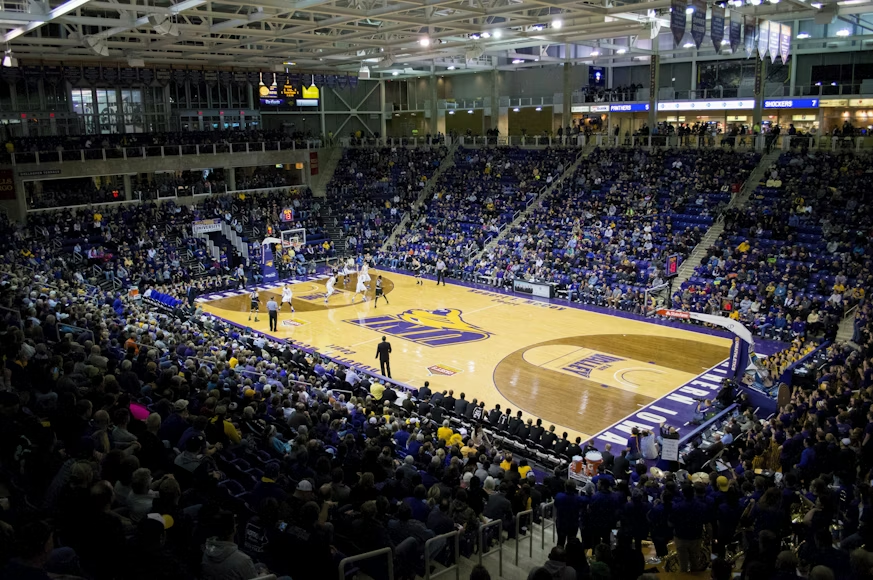
The tournament compresses all of that into two or three weeks in a way that a full regular season rarely does.
Darryn Peterson at Kansas is the clearest example of what happens when that window closes early. He came in with a usage rate above 30% and shooting 38% from deep, a profile GMs describe as a 6-foot-6 guard who can take over a game. But with Kansas eliminated, the conversation has already shifted.
Instead of watching him navigate a second weekend when defenses have had extra time to scheme against him, scouts are now asking how much to weight a short sample.
The tape is still compelling. Without the extended national spotlight, though, he will have to do more of his convincing in workouts and pro days than on television.
Visibility
During the regular season, scouting resources are spread thin. One scout in a mid-major gym, another at a Big 12 showdown, neither watching the same player. In March, that changes. The Sweet 16 and Elite Eight bring all 30 teams into the same buildings, and impressions harden fast when everyone is watching the same possession.
That environment suits players like Keaton Wagler at Illinois particularly well. He starts this tournament projected mid-first round, but a run deep into the bracket if they beat Houson, making plays off the dribble and holding up defensively against NBA-sized athletes in front of a room full of executives, turns a name people like into a name people can't stop bringing up.
Combine Currency: How March Opens the Next Door
Strong tournament runs don't just move mock drafts. They change who gets invited to the next round of evaluation.
NBA Draft Combine spots and individual workout invitations are limited. A prospect who lights up the Sweet 16 is far more likely to secure those opportunities than one who did the same things in a quieter regular-season setting.

For players on the edge of the first round, these few weeks can be the difference between a second-round flyer and guaranteed money. A shooter who hits everything for two weekends will have teams asking whether the efficiency is real, and that question gets answered in NBA gyms with league staffs watching. Even for the top names, a dominant tournament simplifies everything.
Final Thoughts
March Madness sits at the intersection of drama and evaluation. It is the last substantial sample of high-leverage basketball these prospects play before they become professionals, and it hits every lever that matters to front offices: national exposure, sustained pressure, direct comparison against elite competition, and a pathway into the combine and workout circuit.
Every breakout performance and every late-game possession over the next few weeks will be clipped, shared, and replayed inside front offices across the league.
A great tournament run won’t guarantee NBA success, and a difficult bracket exit doesn’t just erase a year's worth of work. But it absolutely moves boards in meaningful ways.
