
Rienk Mast has Pinnacle Bank Arena rocking at capacity, something that seemed nigh-on impossible throughout those apathy-inducing years of a decade ago. The big Dutchman has left those dark days in the past and now stares down a Big Ten crowd that actually believes. No longer just hoping for the best. Nebraska is a genuine contender.
Fred Hoiberg built this from seven-win wreckage and a 10-22 2024/25 season that felt more like a eulogy than a rebuild. Now, the Cornhuskers are ranked in the top 10 of the AP Poll for the first time since 1966, projected around the 4-seed line, and Mast is the engine of something genuinely historic.
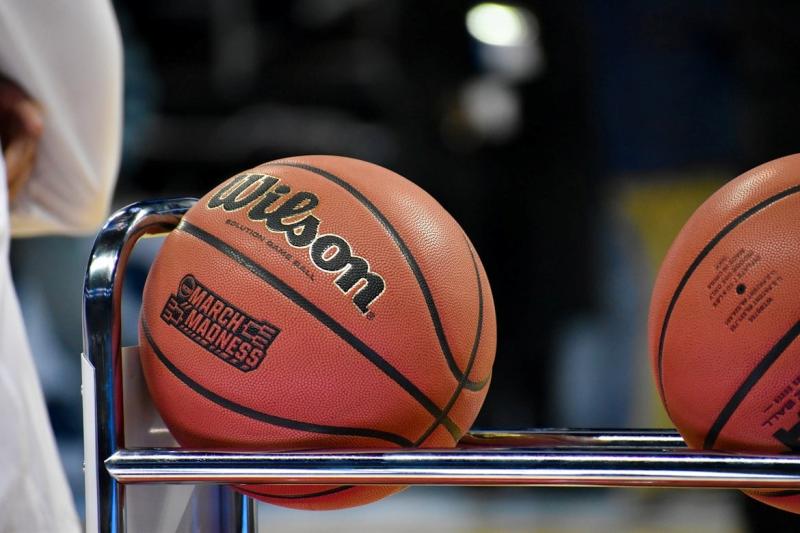
This is what March Madness manufactures. Not just upsets — transformations. And Hoiberg's side isn't the only one. Four programs are barreling towards Selection Sunday in the midst of fairytale campaigns. But which of these Cinderella stories will be able to carry the weight of being programs that were irrelevant not long ago and are now, suddenly, terrifyingly dangerous? Let's look.
Nebraska
No NCAA Tournament wins. Ever. Zero for eight, all-time. That's as bad a record as you will find anywhere in the country. And yet, the Cornhuskers faithful are dreaming that this year will be different.
Hoiberg inherited a program that had made two tournament appearances since 1998 and turned it into the highest-ranked Division I team in Nebraska history through obsessive system-building. The 2025-26 Cornhuskers went undefeated in non-conference play for the first time since 1928-29, then stormed Big Ten play — and none of it happened through individual brilliance alone. Nebraska leads the country in ball movement: 18.4 assists per game (top 10 nationally), an assist-to-turnover ratio of 2.074 that ranks third in D1, 11.0 made threes per game (11th nationally), and a defense surrendering just 66.1 points per game.
Now, online betting sites have been forced to sit up and take notice. The latest March Madness future odds at Bovada make Nebraska a +6500 fringe contender to go all the way this season. They're by no means a favorite, with that honor going to the likes of Duka (+325) and Michigan (+340). However, being on the periphery is the closest the Cornhuskers have ever come to success.
Rienk Mast is without question the jewel in the crown — 18.1 PPG from a switchable, 6'10" complete forward who doesn't need ISO reps to punish you. He punishes you with angles, with unselfishness, with a passing instinct that makes power-conference defenses rotate themselves into exhaustion. Here's the thing about a scheme-first 4-seed in the bracket: isolation-heavy opponents who haven't seen this kind of ball movement all year get lost in March. Hoiberg won four tournament games at Iowa State. He has been here before. His team, though — this Nebraska team — has not, and that could prove crucial.
Saint Louis
Josh Schertz has never coached a roster this loaded, and the A-10 has never seen a team quite this efficient. The Billikens are 27-3, running the A-10 at 15-2, projecting as a 6-seed — and if it weren't for a heartbreaking single-possession loss to Stanford, we'd be talking about a 25-0 juggernaut and the most compelling mid-major story in the country.
Robbie Avila is genuinely one of a kind. A 6'9" big man who leads all Division I centers in three-point attempts per game (1.8) and assists per game (4.0) while dropping 17.3 points a night— the "statistical unicorn" tag isn't hyperbole; it's accurate. Power-conference bigs who have never guarded anyone who drags them to the arc and then threads skip passes don't adjust to Avila in two days of film prep. They just don't. Add Trey Green — a guard capable of dropping six threes in a single game — into a team-wide shooting environment of 51.7% from the floor and 41.2% from deep, and you have a possession-efficient offense that doesn't beat itself.
Can Saint Louis' shooting translate against power-conference physicality in the second weekend? That's the legitimate regression concern — the A-10, for all its battles, doesn't throw the defensive length of an SEC or Big 12 contender at you. But tired defenses in second-weekend games surrender open catch-and-shoot threes, and nobody in this bracket shoots them better. At +15000, this is a sweet-sixteen team masquerading as a longshot.
Utah State
For six weeks in late November and December, Utah State looked like the Mountain West's legitimate Final Four dark horse — 15-1, cracking the AP Top 25 at No. 23, playing with a backcourt electricity that genuinely thrilled. Mid-season losses to Grand Canyon and UNLV dulled the national narrative. The team didn't actually collapse; the bracket bubble watch just got complicated.
MJ Collins (17.3 PPG, 49.4% FG, 37.1% 3PT) and Mason Falslev (16.0 PPG, 5.8 RPG, 2.9 APG, 2.0 SPG) are as complementary a backcourt battery as you'll find at any seed lower than a 7. Falslev is the story — a Utah product who rewrote the program's freshman steal record with 79 in a season, a disruptive two-way menace whose instincts run at a different frequency than most guards his age. They've got 2021 second-round pedigree to draw on. They've got the scoring profiles to punish any defense that switches wrong.
As a 9 or 10-seed, Utah State's backcourt is a matchup nightmare for a fatigued power-conference opponent in the first round. Don't sleep on them. At +22500, this screams value.
New Mexico
Last year's 75-66 demolition of No. 5 Marquette was the first tournament win since 2012. It wasn't a fluke — it was a preview. New Mexico returns, building on a watershed 27-7 campaign, a Mountain West regular-season title, and now a freshman who doesn't appear to understand the concept of pressure.
Jake Hall — a 3-star recruit from Carlsbad High School who scored 3,106 career prep points at 28.5 PPG — is posting 16.0 PPG on 49.0% from the floor and a scorching 44.8% from three. His 27-point road performance at San Jose State showed he doesn't need a friendly environment to impose his will.
At +40000, the payout potential on a repeat upset is massive. More practically: a freshman who shoots 44.8% from three in Mountain West conditions can do anything he wants against a defensive scheme that hasn't prepared for his combination of size, shot creation, and range. The 1974 Elite Eight is ancient history. This team is working in the present tense.
