
The morning commute is a specific ritual of modern life. It starts with the click of a door lock and
ends with the hum of an office elevator. For some, these forty or sixty minutes are a gray zone of
forced inactivity. People lean against cold windows, listen to the rhythmic squeak of the train, and
watch dust motes dance in the morning light. However, this time does not have to be a vacuum. It
can be transformed into a personal space for discovery or relaxation.

1. Diving into Quick Digital Entertainment
Small screens have changed the physics of waiting. Instead of staring at the back of a stranger’s
head, a person can immerse themselves in short, intense sessions of interaction. This is where
casual games and simulators come in, offering a quick dopamine hit without requiring hours of
commitment. Some people prefer complex puzzles, while others look for something more dynamic
and visual.
Often, the best way to handle a long trip is to find a balance between tension and simple fun. For
instance, looking at a Chicken Road demo allows a user to test out game mechanics and see if the
interface feels right before diving in deeper. These platforms usually offer a smooth experience
where statistics and strategies are visible at a glance, making the process feel productive rather
than just mindless clicking.
Practical reasons to choose quick sessions:
● Minimal entry threshold. You can start and stop exactly when the bus arrives at your stop.
● Low cognitive load. It helps wake up the brain without the stress of complex work tasks.
● Visual variety. Bright interfaces contrast with the monotonous gray scenery outside the
window.
2. The Rise of the Spoken Word
Audiobooks and podcasts have replaced the rustle of morning newspapers. There is something
deeply human about listening to a story while the world rushes past in a blur of motion. A person
might be standing in a crowded carriage, but in their mind, they are traversing a historical
battlefield or sitting in on a high-stakes business negotiation.
The choice of content usually depends on the morning mood. Some prefer "infotainment" — a mix
of science and humor — while others use the time for language learning or professional growth.
1. Educational podcasts. These provide a sense of achievement before the workday even
begins.
2. Fiction audiobooks. A well-narrated story creates a cinematic experience that masks the
noise of the commute.
3. Guided meditations. Useful for those who find the morning rush-hour crowd a source of
sensory overload.
3. Curated Video Feeds and Micro-Learning
Short-form video content has evolved beyond simple entertainment. It has become a tool for
micro-learning. While the bus navigates through traffic, a commuter can watch a three-minute
breakdown of a complex economic concept or a quick tutorial on a new software tool. The vibration
of the vehicle becomes unnoticeable when the focus is locked on a crisp, well-edited sequence of
information.
Modern platforms use algorithms to tailor these feeds, ensuring the content stays relevant. It is a
way to stay informed without the heavy lifting of reading long-form articles in a shaky environment.
This approach works because it matches the natural attention span of a person in transit. The
information is delivered in bitesize chunks that are easy to digest between transfers. It creates a
feeling of constant movement, not just physical, but intellectual.
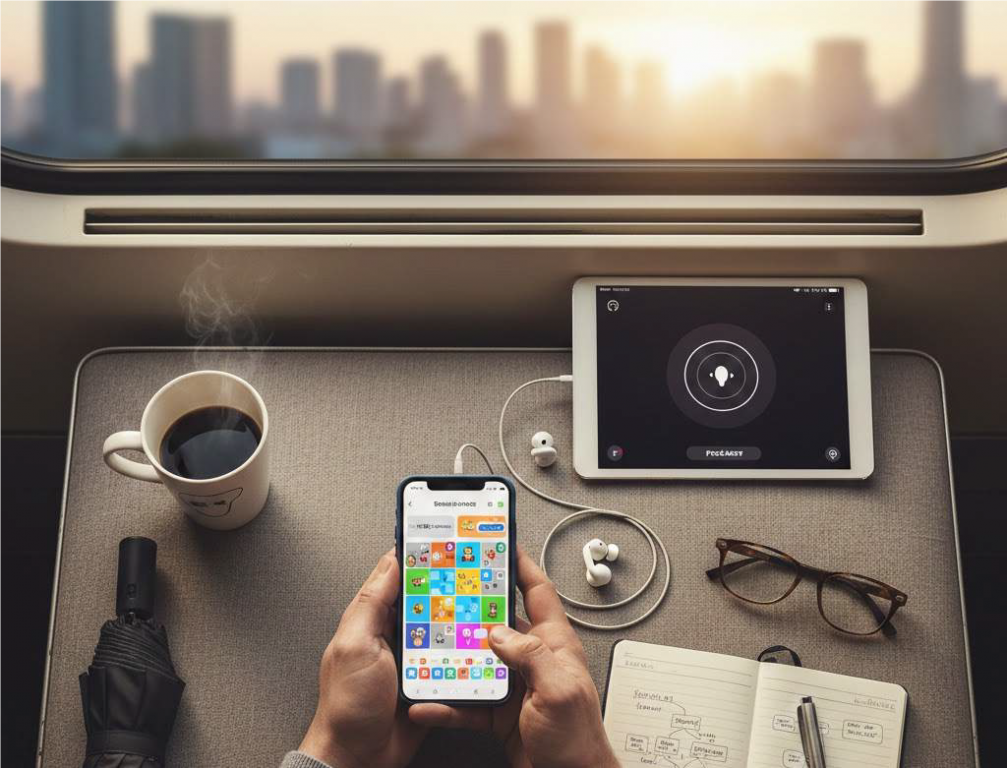
4. The Art of Digital Cleaning
The morning commute is an ideal time for digital hygiene. Most people have thousands of photos,
unread emails, and unused apps cluttering their devices. There is a quiet satisfaction in the "swipe
and delete" motion. It is a mechanical task that requires just enough focus to be engaging but not
enough to be exhausting.
By the time a person reaches their destination, their digital environment is as organized as their
physical workspace should be. This habit reduces "notification anxiety" and prepares the mind for
the tasks ahead.
Benefits of a morning digital cleanup:
● Increased device performance by clearing out the cache and old files.
● Reduced mental clutter by unsubscribing from useless newsletters.
● Better organization of personal memories through photo sorting.
5. Strategic Planning and Note-Taking
Sometimes the best way to kill time is to use it to "buy" more time later in the day. Writing down a
few key objectives or capturing a sudden idea can change the trajectory of the entire afternoon.
The tap of a finger on glass or the scratch of a pen on paper provides a tactile anchor in a moving
world.
It is not about formal "to-do" lists. It is about capturing the "shower thoughts" that occur when the
mind is allowed to wander during a commute. These fragments of ideas often become the most
valuable insights of the week.
Using the commute for reflection:
1. Drafting emails. Getting the difficult messages out of the way early.
2. Mind mapping. Visualizing how different projects connect.
3. Observation. Simply watching the world and taking notes on people or urban design.
The commute is a transition. It is the bridge between the private self and the professional persona.
Whether through a quick game, an engaging podcast, or a moment of reflection, how a person
crosses that bridge defines their day.
